Integrated Truck Loading Safety Solution
Data-driven risk control for hazardous liquid loading operations
Solution Overview
The Integrated Truck Loading Safety Solution is a system-level safety and automation solution built on six core products: Loading Arm, ATEX Batch Controller, Safety Interlock Integrated Unit, Overfill & Static Grounding Protector, Explosion-Proof LED Display, Explosion-Proof Barrier Gate
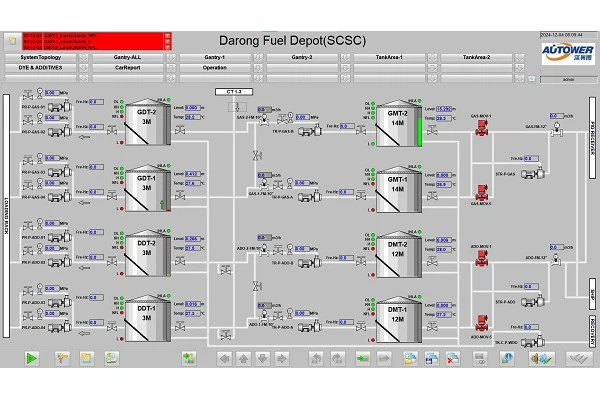
These devices are interconnected to form a unified safety control system, covering vehicle access, loading execution, safety interlock, overfill protection and real-time monitoring.
The solution transforms traditional manual loading into a controlled, automated and traceable process.
|
The solution transforms traditional manual loading into a controlled, automated and traceable process. | |
In high-risk industries such as oil, gas and chemicals, truck loading operations are widely recognized as one of the most dangerous stages in the entire supply chain.
Industry safety indicators show that:
①According to the IOGP (International Association of Oil & Gas Producers), the total recordable incident rate (TRIR) in the global oil and gas industry is approximately 0.81 (2024).
②According to the U.S. Bureau of Labor Statistics (BLS), the TRIR in the chemical industry typically ranges from 1.0 to 1.6.
③According to PHMSA statistics, 25% – 40% of hazardous material accidents occur during loading or unloading, rather than during transportation.
Historical data shows that loading and unloading operations are 7–10 times more likely to cause accidents than vehicles in transit.
These figures clearly indicate that truck loading is not only a routine operation, but one of the most critical risk points in hazardous material logistics.
Industry Pain Points
Most accidents during truck loading are not caused by large explosions, but by high-frequency operational failures:
Leakage and spillage
Approximately 80% of loading accidents involve liquid leakage due to failed connections or improper operations.
Slips, trips and falls
Account for 20% – 25% of personnel injuries, especially during top loading operations.
Fire and explosion
Although less frequent (2% – 8%), these incidents result in the most severe consequences.
Human factors
Around 26% of serious accidents are directly related to operator violations or fatigue.
System Workflow
The system operates through a standardized safety workflow:
Core Components and Their Safety Value
Choose the plan that suits you best.
Truck loading is highly dangerous due to frequent human-machine interaction. Manual hose connection is one of the main causes of leakage and operator injuries.
By using automated or controlled loading arms, manual connection is largely eliminated. The rigid structure and sealed joints significantly reduce the probability of leakage, mechanical failure and human error.
Overfilling is one of the most common causes of spills and environmental accidents.
The batch controller performs accurate quantitative loading, automatically closes valves at target volume and records loading data. In abnormal situations, it receives interlock signals and immediately shuts down the loading process.
Safety Interlock Integrated Unit
Human error accounts for approximately 26% of serious loading accidents.
The safety interlock system forces operators to follow a predefined safety sequence. Loading can only start after all safety conditions are confirmed, including grounding status, arm position, gas detection and key management.
This transforms human behavior from a risk factor into a controlled variable.
Static electricity accumulation is one of the most dangerous hidden risks in loading flammable liquids.
This device continuously monitors vehicle grounding and liquid level. If grounding is lost or overfill is detected, the system immediately cuts off the loading signal and activates alarms.
It directly addresses two major accident triggers: static discharge and overfilling.
Lack of on-site visibility delays operator response and increases accident escalation risk.
The explosion-proof LED display provides real-time information, including loading volume, flow rate and system status, allowing operators to make immediate decisions under hazardous conditions.
Explosion-Proof Barrier Gate
Uncontrolled vehicle entry leads to operational disorder and increases accident probability.
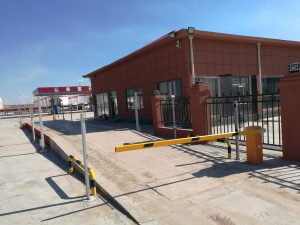
The explosion-proof barrier gate ensures only authorized and properly prepared vehicles can enter the loading zone, improving site discipline and process safety.
Key Advantages
Fully integrated safety and automation system
All core devices are interconnected through a unified control logic, forming a closed-loop system rather than isolated equipment.
Significant reduction of leakage and overfill risks
Automated loading arms and batch control prevent manual connection errors and ensure precise shut-off at target volume.
Real-time static grounding protection
Continuous grounding detection ensures that loading can only proceed when reliable static discharge conditions are met.
Mandatory safety sequence enforcement
The safety interlock system forces operators to follow a predefined operation sequence, preventing unsafe actions and bypass behavior.
Reduced human error and operational deviation
Key steps are controlled by system logic instead of personal judgment, minimizing risks caused by fatigue or misoperation.
Accurate metering and data traceability
The batch controller records every loading operation, providing reliable data for auditing, reporting and dispute resolution.
Explosion-proof design for hazardous environments
All critical components are designed for use in explosive atmospheres, ensuring long-term safe operation in high-risk zones.
Application Scenarios
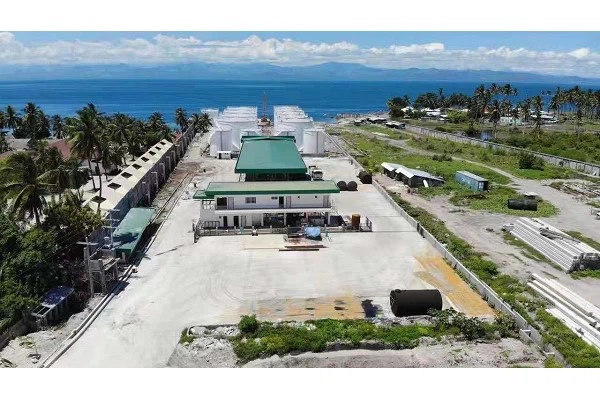
This solution is widely used in: Oil terminals, Chemical plants, Fuel depots, LNG / LPG stations, Tank truck and railcar loading areas
Suitable for gasoline, diesel, aviation fuel, crude oil and chemical liquids.
Standards & Compliance
The system is designed in accordance with:
ATEX Ex explosion-proof standards
ATEX Ex explosion-proof standards
CE certification
ASME certification
SIL certification
SIL certification
It supports communication with DCS and SCADA systems for centralized supervision.
Project Value
By targeting the key risk factors identified in industry statistics, this solution:Directly reduces the main causes of 80% of leakage accidents, Effectively controls static discharge and overfill risks, Converts human error into controlled system behavior, Improves overall operational safety and regulatory compliance
Products Description
Looking for a safer and smarter truck loading solution?
Our engineering team provides:
On-site risk assessment
System design and configuration
Equipment selection and integration
Technical consultation
Contact us today to build a safer loading operation.