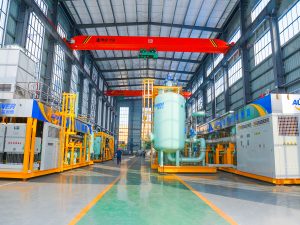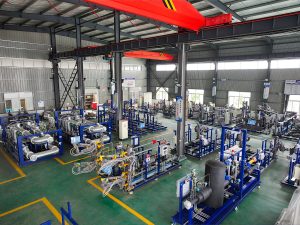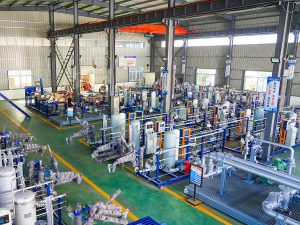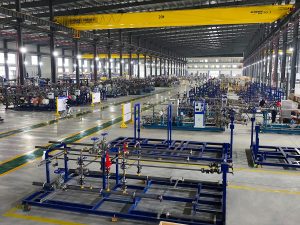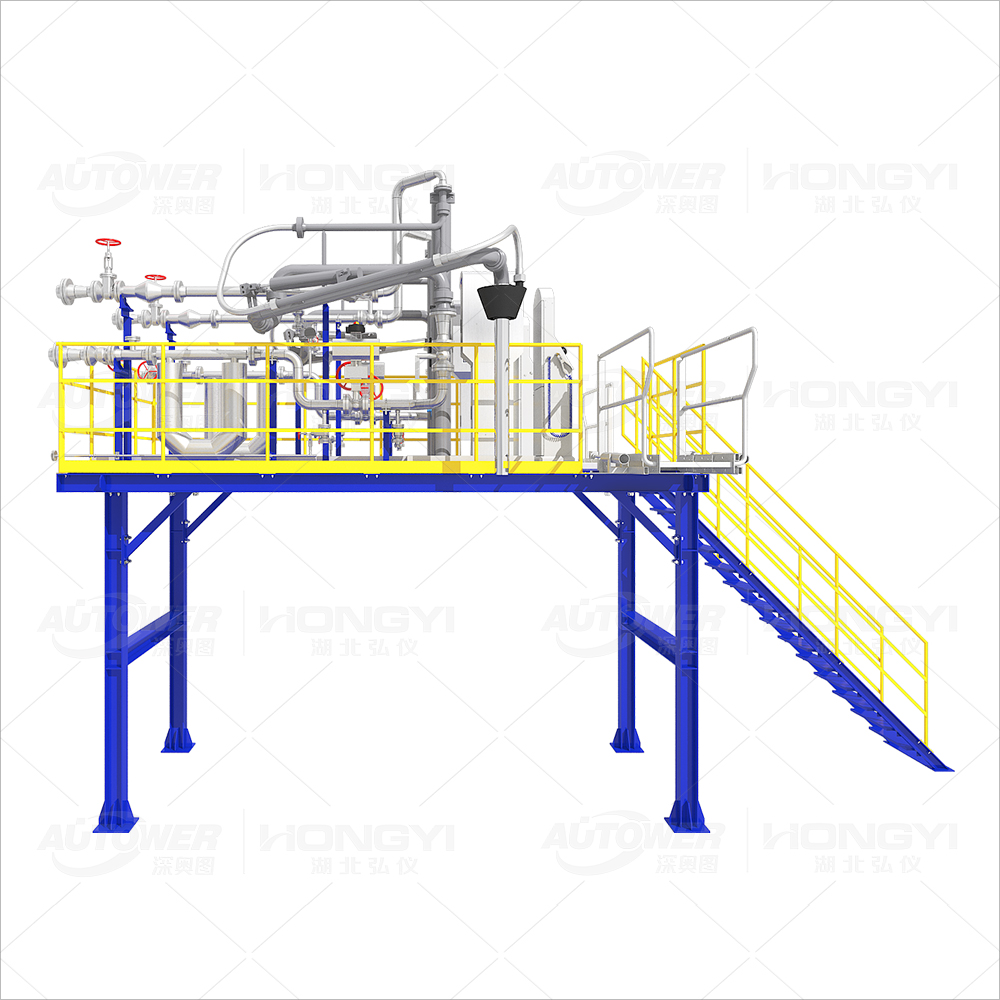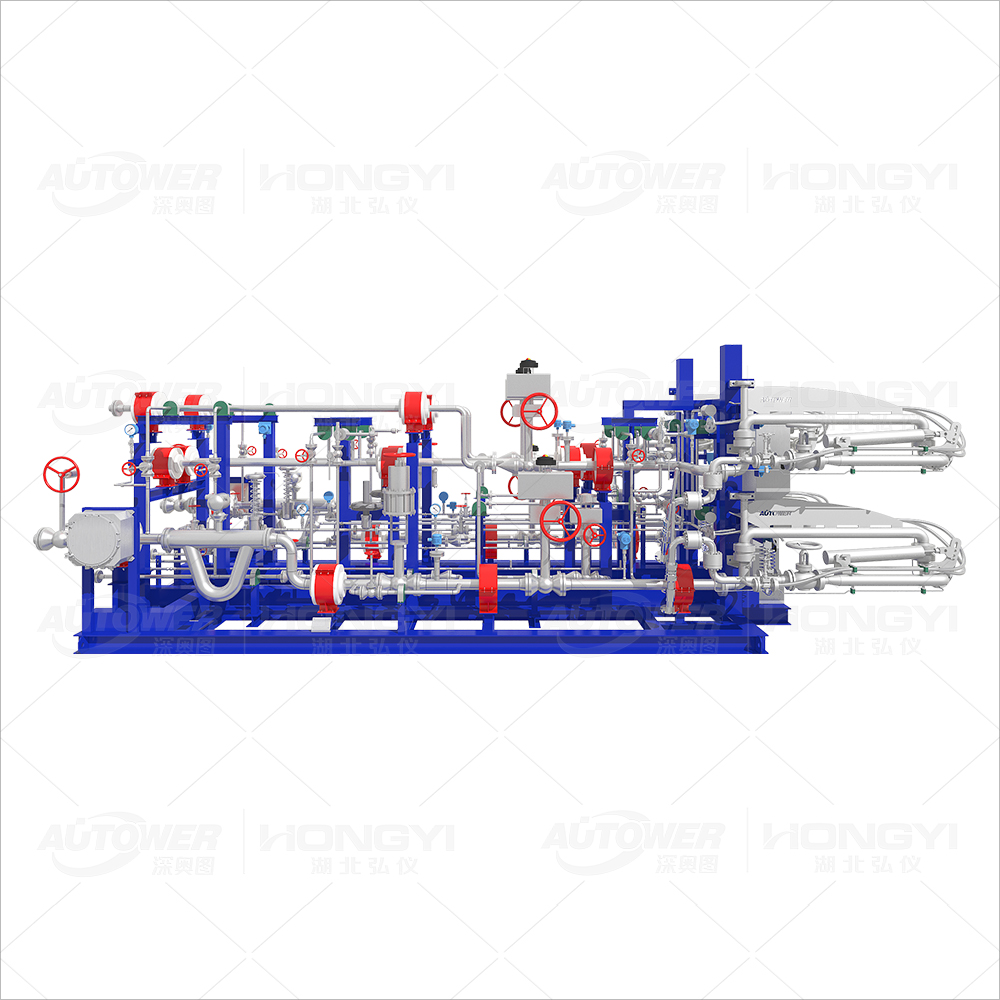
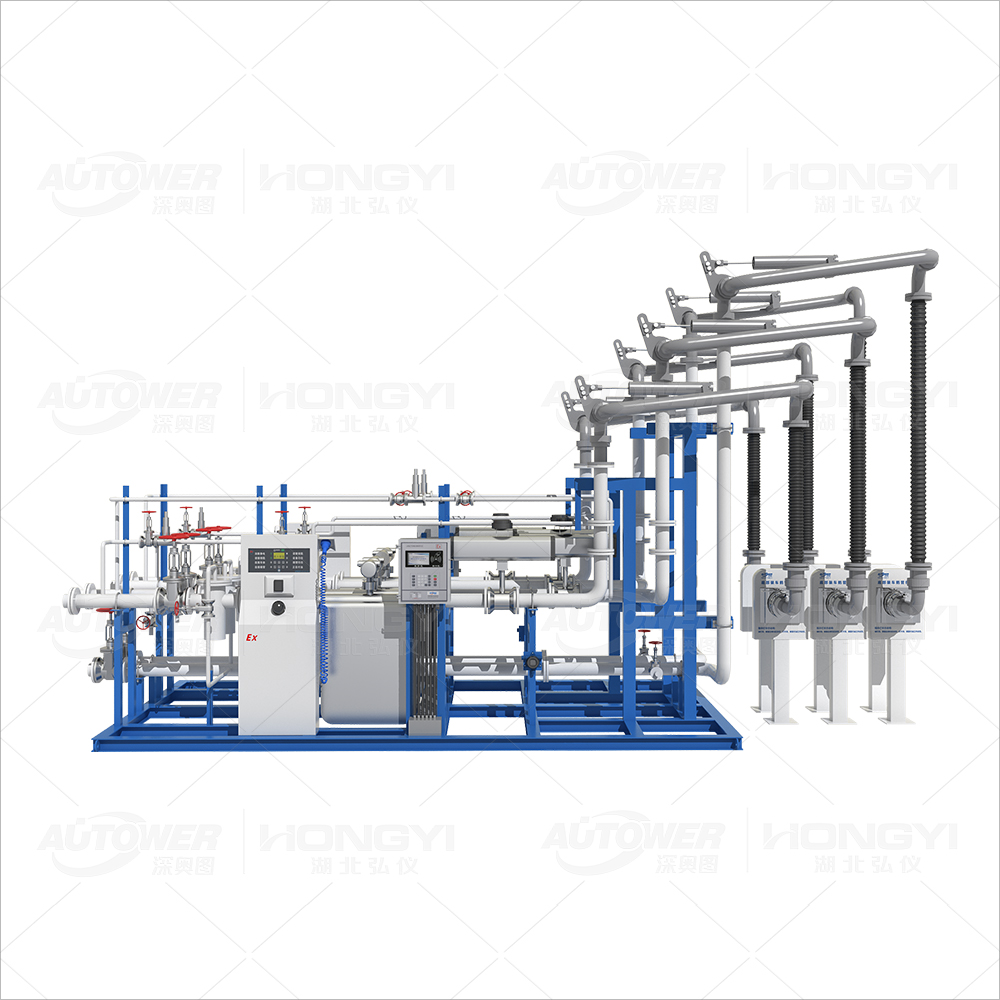
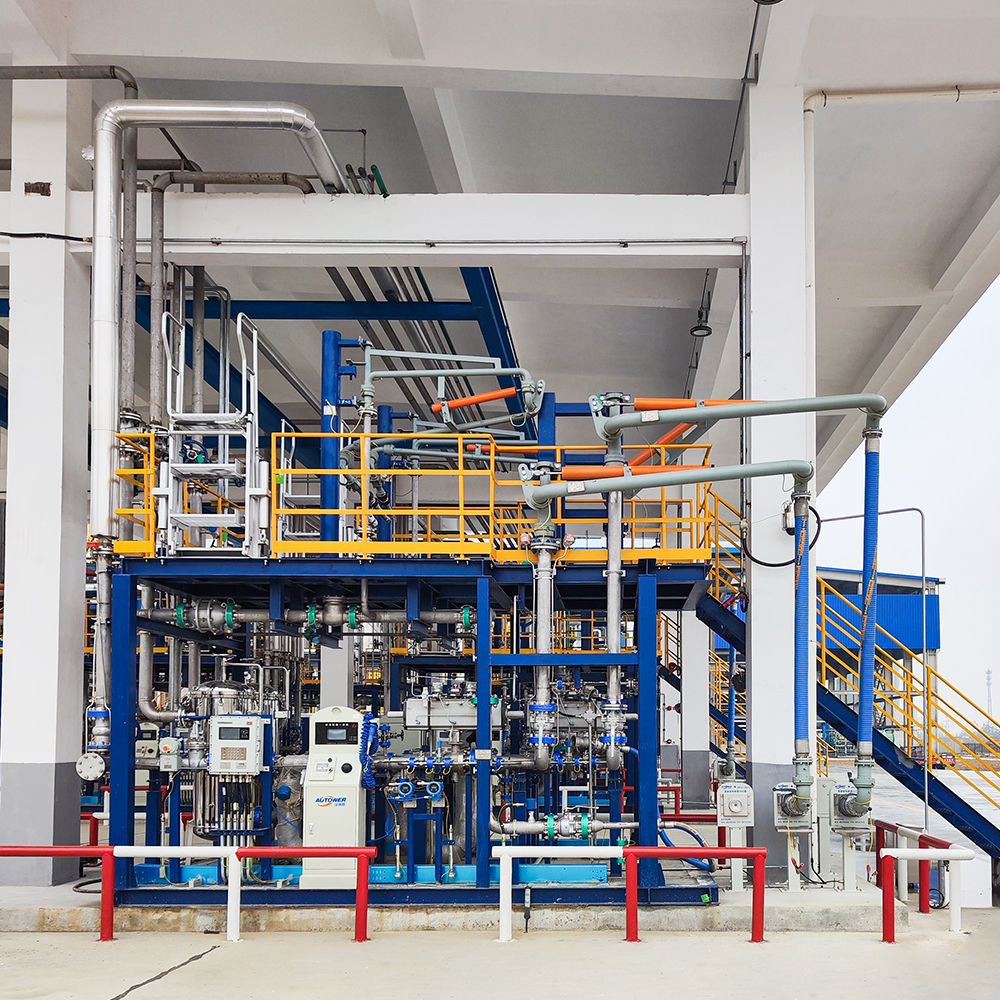
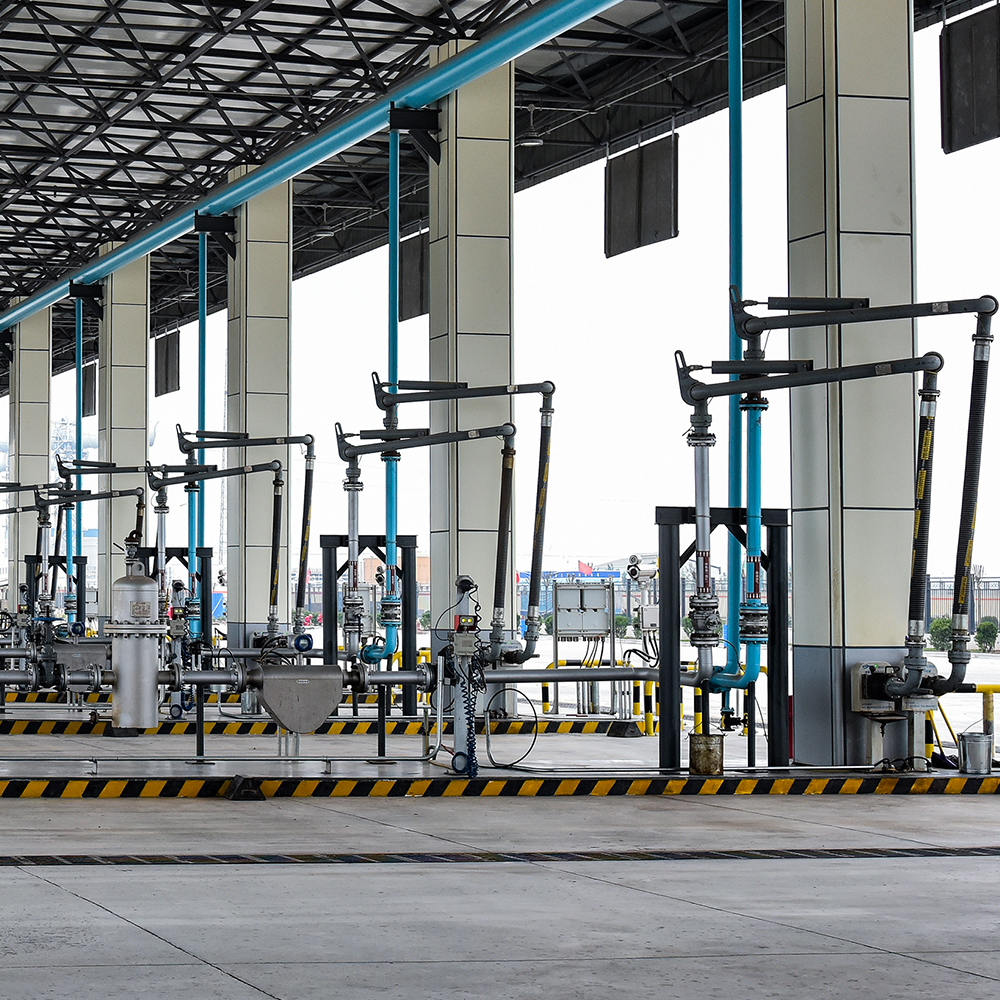
The API Bottom Loading Skid is a closed-loop fluid handling system specifically designed for hazardous chemicals, refined oils (gasoline, diesel).
It utilizes the API Standard Socket at the bottom of the tanker for material transfer, working in tandem with a Vapor Recovery Arm at the top to captureemissions. Fully compliant with environmental (VOCs control) and safety regulations, this system is the standard equipment for modern large-scalerefineries, oil depots, and chemical terminals.
The core principle of the API Bottom Loading Skid is “Bottom In, Top Out; Vapor-Liquid Balance.”
1. Physical Connection:Liquid Phase: The operator quickly connects the API Coupler at the end of the loading arm to the API Socket at the bottom of the tanker.
Vapor Phase: The top Vapor Recovery Arm is connected to the tanker’s Vapor Port.
2. Fluid Dynamics:Inlet: The pump starts, and material enters the tanker through the bottom piping. Since the feed is from the bottom, the liquid rises smoothly without splashing, significantly reducing static electricity generation.
Exhaust: As the liquid level rises, vapors inside the tanker are compressed. Since the vapor arm is connected to the storage tank’s vapor line, the vapors are “pushed” back to the tank, forming a closed loop and achieving zero emissions.
3. Safety Logic (Interlocking):The system employs a “Series Interlock” logic. The pneumatic valve will only open when Static Grounding is Normal + Overfill Probe Inserted + Bottom Coupler Connected.
Once the overfill probe contacts the liquid, the circuit closes (or opens), and the controller cuts the main valve within milliseconds to prevent overflow.
| 1 | 2 | 3 | 4 |
| Liquid Loading Unit (Bottom) | Vapor Recovery Unit (Top) | Metering & Control Unit (Skid Base) | Safety Interlock Unit |
| API Bottom Loading Arm: Typically constructed with stainless steel hoses or rigid arms, equipped with an API 1004 Standard Dry Break Coupler at the end. Self-Locking Mechanism: Automatically locks upon connection with the tanker socket to prevent accidental disconnection. | Vapor Recovery Arm: Mounted on the upper column, used to connect to the tanker’s API vapor port. Flame Arrester: Usually installed on the vapor line to prevent flashback. Function: Channels vapors displaced by the rising liquid back to the storage tank or processing unit. | Mass Flow Meter: High-precision metering (e.g., Coriolis flow meter) for trade settlement. Batch Controller: The “brain” of the system, responsible for setting loading quantities, controlling valves, and displaying data. Pneumatic Shut-off Valve: Executes opening/closing actions with a fast-closing feature for emergency cuts. | Overfill Sensor: Inserted into the tanker’s top vapor port (API 1004 standard probe); sends a signal to the controller to stop the pump immediately when the liquid level touches the probe. Static Grounding Interlock: The system only allows startup if the static grounding clamp is connected. Pedestal Sensor: Detects if the tanker is correctly positioned in the loading bay. |
| Bottom skid-mounted structure | API Bottom loading type |
| There are two types: unilateral and bilateral | The length is about 4-6 m |
| Fluid medium | Gasoline, diesel, kerosene and other refined oil |
| Material of wetted pipes or parts | 20# carbon steel,304 SS,316SS |
| Matching loading arm | Metal hose with dry coupler |
| Matching flow meter | Mass flow meter, dual rotor flow meter optional |
| Matching valve | Pneumatic two-stage valve and electro-hydraulic valve are optional |
| Matching overfill grounding protector | Bottom-mounted integrated type, with standard API connector, self-equipped with level switch tanker |
| Other Matching instruments | Pressure gauge, bimetal thermometer |
| Other matching process equipment | Expansion joints, manual valves, stop valves, etc. |
| Connector | Cables, galvanized pipes, bridges, explosion-proof flexible pipes, etc. |
| 1 | 2 | 3 |
| Environmental Protection | Safety and Cleanliness | Efficiency |
| Fully closed-loop; vapor recovery rate >99%; no volatilization or odor; compliant with the strictest environmental regulations. |
No splashing (bottom feed); extremely low static risk; overfill protection eliminates tank overflow accidents. No dripping; keeps the ground clean and oil-free. |
Quick connection (API coupler pushes and locks); no need to climb the tanker roof; single-person operation; fast loading speed.1 |
To enhance packaging quality, strengthen packaging management, and prevent product loss or damage during transit resulting from packaging-related issues, this Export Packaging Specification has been specifically formulated.
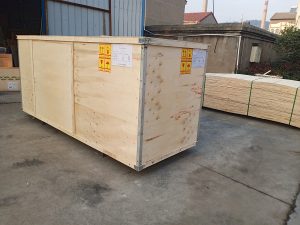
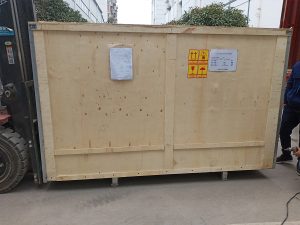
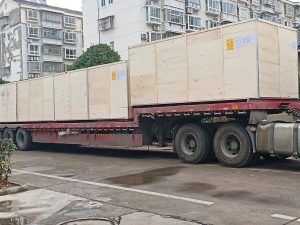
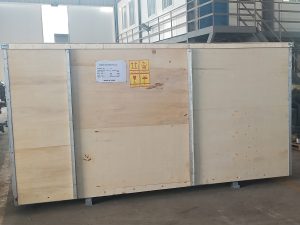
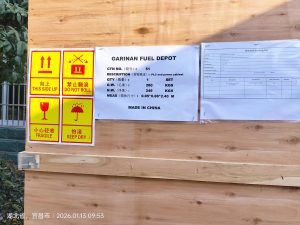
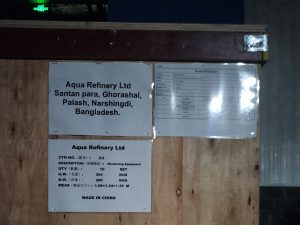
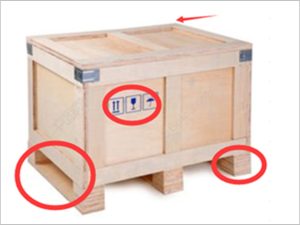
This specification applies to the packaging of all products exported by this Company.
| Requirement | Responsible Dept. | |
| Before Packaging | Confirm that the product has been tested and is free of defects. Confirm that the product’s exterior is clean and free of stains, standing water, or similar issues. | Quality Dept. |
| Product Packaging | 1. Skid-mounted and Containerized Packaging: A three-layer packaging system—comprising inner, intermediate, and outer packaging—is required. The packaging must be securely fastened and stable, providing effective protection for the product. a. Individual instruments on the skid must be protected with bubble wrap and tightly bound with stretch film. b. The entire skid must be protected with bubble wrap and tightly bound with stretch film. . Containers equipped with racks must be securely fastened using strapping bands. d. Loose piping must be wrapped in protective fabric to prevent paint damage from impact, and then placed onto a dedicated packing rack. Legend 2. Individual Packaging A three-layer packaging system—comprising inner, intermediate, and outer packaging—is required. The packaging must be securely fastened and stable, providing effective protection for the product. Inner Packaging: Foam wrap must be used to fully enclose the items, ensuring that no direct collision or friction occurs between products or between the products and the carton. Each individual item must bear both Chinese and English labels to facilitate inventory verification by the customer. Intermediate Packaging: Packed in cartons. Outer Packaging: Wooden crate packaging. The materials used must consist of plywood crates (fumigation-free) reinforced with steel strips. Any remaining space inside the box must be filled with cushioning material. For heavier products, particular attention should be paid to packaging strength to prevent damage during transit. | Production Dept / Warehousing & Logistics Dept |
| packaging | 1. Steel strips / wide wooden slats to wrap the 8 legs. Note: Wooden slat width: mm; thickness: mm. 2. 6–8 reinforcement points inside the box. 3. For any face exceeding 2 CBM, cross-bar or I-beam steel reinforcement is required. Note: The spacing between cross-bars/I-beams must be less than or equal to mm. 4. All packaging must include forklift access points to facilitate loading and unloading. 5. Packaging must be designed based on the dimensions of the container; under no circumstances should it exceed the container’s length, width, or height. | Warehousing & Logistics Dept |
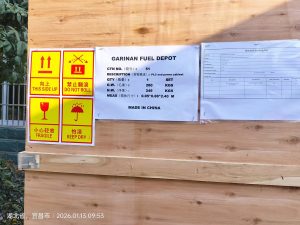
| Shipping Mark | In accordance with the accompanying documentation, affix the shipping marks and packing lists to the front and sides, respectively . | Warehousing & Logistics Dept |
| Packaging Markings | Fragile, Keep Dry, This Side Up. Labels must be clear and securely affixed. | Warehousing & Logistics Dept |
| Instruction Manual placement | You must include: an instruction manual (either entirely in English or bilingual English-Chinese), a Certificate of Conformity, and a test report. (Note: No documents may be submitted exclusively in Chinese.) | Quality Dept |
| Take photos for the archive. | The packaging process must be documented via photographs or video recordings, and relevant information retained. All photographic and video files must be date-stamped and subsequently archived. | Warehousing & Logistics Dept |